
The Army Reserve (or Militia) has become a valued contributor to the Regular Force. Today Reservists are standing shoulder to shoulder with their Regular Force Peers, fighting the War on Terror. Farley Mowat captured it the best when he wrote, yet there was one hidden weapon; one ignored by most of those who calculated military strength, ignored by the government itself and yet a weapon infinitely more powerful, and ready than any in the official armoury. It was called the Militia. No words have been spoken that are more true today.
About The Regiment
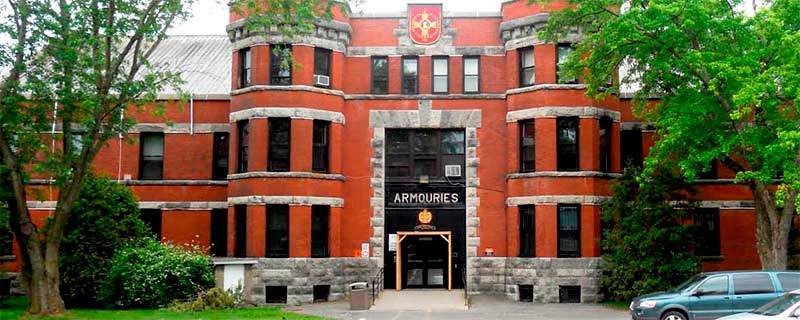
The Army Reserve is made up of citizen soldiers who train part-time at local armouries throughout the year and full-time (as their civilian employment permits) at military bases across Canada during the summer. Reserves also contribute to NATO deployments, and UN missions.
The Regiment forms part of 33 Canadian Brigade Group within Land Force Central Area/Joint Task Force Central. Regimental Headquarters is located in Belleville, Ontario with additional companies in Peterborough and Cobourg.
From its modest beginnings as several local militia units in 1800 to being awarded more Battle Honours during WWII than any other Canadian Infantry Regiment, the Hasty Ps have served well and selflessly when called upon, always living up to The Regimental motto: PARATUS… meaning ‘ready’ in Latin. After WWII, two war time Commanding Officers, went on to Command the Canadian Forces, Lieutenant General H. Graham, went on to become the Chief of the General Staff, and General J. Dextrase, who commanded the 2nd Bn Hast&PER as it prepared for Pacific duty went on to become the Chief of Defense Staff, and Major General J. Richardson went on to be the Chief Reserves and Cadets.
The Regiment continually boasts among the highest turnouts for area readiness exercises, scores top marks for annual inspections and places many soldiers on overseas operations. The Regiment has trained and continues to train soldiers that serve with pride and distinction.
The Regiment was made famous in Farley Mowat’s historical book, The Regiment. Captain Mowat served as a platoon commander and later as an intelligence officer for the regiment. Farley put pen to paper, and the finished product, was the world acclaimed book, The Regiment. Since then, the Hastings and Prince Edward Regiment has been the subject of many books.
History of the Regiment
The United Empire Loyalists who settled in the county of Hastings and Prince Edward organized the first local Militia units for self-defence. The Hastings and Prince Edward Regiment is the modern descendant of those Militia units.
Pre World War I
- 1800 – Col. A Macdonnell forms the 1st Regiment of Prince Edward Militia.
- 1804 – Col. J Ferguson forms the 1st Regiment of Hastings Militia.
- 1812 – The Regiments provided units that served in the War of 1812
- 1837 – 1838 – The Regiments provided units that served in the McKenzie Rebellion
- 1860 – During the time of the Fenian threat, the Canadian Government authorized the formation of new independent infantry companies.
- 1863 – The 15th Battalion Volunteer Militia (Infantry) Belleville is authorized.
- 1866 – The 15th Battalion Volunteer Militia (Infantry), Canada was called out on active serve on 8 March 1866. It was removed from active service on 27 March 1866.
- 1866 – The 1st Hastings was re-designated the 49th Regiment (Hastings Rifles).
- 1867 – The 16th Prince Edward Battalion of Infantry, was re-designated once again as the 16th Prince Edward Regiment.
- 1885 – The 15th Argyll formed ‘H’ Company in the Midland Battalion for service during the Northwest Rebellion. This service is the source of the Battle Honour which is part of the current day Regimental Battle Honours.
- 1885 – In North-West Canada, a number of individuals served with the Royal Canadian Regiment during the Boer War.
- 1889-1902 – Over a three year period seventy seven soldiers from The 15th Argyll Light Infantry, the 16th Price Edward Regiment, the 49th Regiment Hastings Rifles, and the 40th Northumberland Regiment provided volunteers for Canadian continents during the South African War, 1899-1902. Our heaviest troop involvement was in 1900.
World War I
Few Canadian Regiments served as such overseas in WWI. Men were enlisted in Battalions designated only as numbers. Militia from the Quinte region formed the 39th, 80th, 136th, 155th, and 254th Infantry Battalions as well as the 21st and 77th Infantry Battalions and the 1st Forestry Battalion. Their valour in action earned them the following Battle Honours:
- 1916 – Battle of the SOMME, also known as the Somme Offensive (1 July to 18 November 1916).
- 1917 – Battle of ARRAS (9 April to 16 May, 1917).
- 1917 – Third Battle of YPRES, also known as the Battle of Passchendaele (21 July to 6 November 1917).
- 1916-1918 – HINDENBURG LINE, also known as the Siegfried Line.
Between the Wars
- 1920 – The 16th Prince Edward Regiment and The 49th Hastings Rifles were amalgamated to form The Hastings & Prince Edward Regiment.
- 1934 – The Regiment received new Colours presented by LGen Sir Archibald McDonald. The Regiment also affiliated with the Royal Sussex Regiment and was granted the honour of using their colours of old gold and royal blue. The Royal Sussex Regiment was amalgamated with several other regiments to form The Queen’s Regiment in 1966. It in turn, was absorbed by the modern Princess of Wales Royal Regiment.
World War II
The Regiment mobilized on September 2, 1939, and began training with the relics of WWI leftover uniforms and equipment. Some had to make do with sticks in place of rifles and supplied their own boots and clothing, but by December 19, when they embarked on the HMT Ormonde, they were a fully equipped trained unit.
- 1940-43 – The Regiment trained in Great Britain with the exception of a brief foray into France where the fierce Blitzkrieg waged by the Germans cost them most of their vehicles and The Regimental mascot, Little Chief. A new mascot Chief Petawawa-Much was taken on strength on October 30, 1940 with the service number C.0001. (Little Chief’s number had been C.0000).
- 1943 July 10, the Hasty P’s, part of Canadian Army 1st Division, landed on Green Beach, Sicily and earned eight Battle Honours at the cost of many men, including a Commanding Officer.
- 1943 September 3, an unopposed landing was more than made up for by a vicious running battle with seasoned German Army troops up through the Italian Peninsula as part of the British 8th Army. The Regiment earned twenty more Battle Honours at fearful cost.
- 1945 – The Regiment departed Italy and went to Northwest Europe and joined the 1st Canadian Army where they took an active part in the liberation of Holland. Among The Regiments accomplishments were the capturing of the Dutch Summer Palace at Apeldoorn.
Farley Mowat published a history of The Regiment in WWII. “THE REGIMENT” is a worthy recounting of The Regiment’s accomplishments. Mowat himself was a platoon commander in The Regiment, and later in the war, an intelligence officer in England.
Post-War
- 1951 – Two companies were raised for NATO service in West Germany as part of the 27th Brigade.
- 1954 – Government cutbacks had The Regiment, now headquartered in Belleville, absorb the Midland Regiment, the 34th Battery, and the Argylls.
- 1957 – In October, more than twelve years after the end of the war, Canadian Army Orders finally announced The Regiment had been awarded 31 Battle Honours, (more than any other Canadian regiment) ten of which were emblazoned onto The Regimental Colours.
- 1969 – More cutbacks closed six more Regimental armouries. The armoury in Peterborough remained open, but the 50th Field Regiment and the 28th RCEME were struck off the Order of Battle and their personnel formed ‘B’ Company of the Hastings and Prince Edward Regiment. The regiment now occupied only two armouries.
- 1992 – The Cobourg Armoury officially opened its doors in January and provided a home for ‘C’ Company of the Hastings & Prince Edward Regiment.
- 1992-2014 – Hasty Ps continue to serve across the world in places such as the Sinai, the Golan Heights, Cypress, Kosovo, Bosnia-Herzogovinia, Haiti and Afghanistan.
- 2012 – The Regiment is granted the Honorary Distinction – Defence of Canada 1812-15.
- 2013 – The Regiments celebrates its 150th anniversary of service to Canada.
- 2014 – The Regiment is awarded Battle Honour “South Africa 1900”.
The Commanding Officer of The Hastings & Prince Edward Regiment
LCol Comeau joined the military as an OCdt on 14 Dec 1987. His Employment history within his artillery career has been extensive, first cutting his teeth as a troop commander in H BATTERY, 3RCHA, from 1989-1991. Moving onwards and upwards, he was then posted and employed as a FOO with the Airborne Regiment from 91-93. He was next employed for a short stint working for the Director of Individual Training at NDHQ from 93-94, purchasing training aids for the Army. He was subsequently posted to the Artillery School, where he completed his IG course and instructed in that capacity from 94-96. He was sent back west to Shilo as the 1RCHA BK and Ops O from 1996-2000.
From 2000-2003 he studied in Kingston, where he completed one year of French training, finished his degree at RMC, and completed what we now call AOC. He was then posted back west to Edmonton, where he worked at HQ 1 CMBG both in the G3 and G1 Shop from 2003 to 2005. From 2005 to 2007, he was then posted back to 1RCHA as the BC of C Battery.
Heading back to Edmonton in 2007-2009, he was posted to 3 PPCLI where he was the senior operations advisor for the 1CMBG generated Operational Mentor and Liaison Team (OMLT) for TF 1-08. Upon completion in Jan 09, he was then posted back to Kingston to LFDTS. He was responsible for analyzing, developing and coordinating pre-deployment training for Canada’s OMLT commitment to OP Athena.
Shifting gears once again within LFDTS he moved into the Collective Training section from 2011-2013. His last run in the regular force was working at 10th Mountain Div HQ and G5 Maneuvre/ fires planner SFA Coord where he was responsible to the Commanding General for maneuver and fires planning for a US Army division comprised of more than 21,0000 soldiers in 6 Brigades.
His Operational deployments consist of Op Deliverance Somalia 1992, UNSCOM Iraq 1996, Op Palladium Bosnia 1997, Op Athena Kandahar 2008, Op Enduring Freedom Kandahar 2011, and Op Enduring Freedom Bagram. Between 2010-2015 he was awarded 2 X CDS Commendations as well as the US Army Bronze Star and the US Meritorious Service Medal.
LCol Comeau has now officially left the Royal Regiment of Canadian Artillery, but it was only to move on to bigger and better things. He will remain in Kingston, Ontario, with his two children Reegan and Avery. He has been appointed Commanding Officer of the Hastings and Prince Edward Regiment commencing 3 March 2016. He is currently doing contract work for a US security company, focusing on Security Force Capacity Building, Counterinsurgency and Stability operations worldwide. He also dabbles in Class B employment at PSTC.
RSM of the Regiment
Chief Warrant Officer Ben Piché joined the Canadian Forces in January 1981. On completion of his infantry basic training, he was posted to the 3rd Battalion of Royal 22nd Regiment. Following his dream of completing the basic parachutist course in the fall of 1982, he was immediately posted to the Canadian Airborne Regiment, where he served for a period of six years. Throughout this time, he took part in various trade courses and deployed to Cyprus.
Past Commanding Officer
The Hastings and Prince Edward Regiment has been under the leadership of many different commanding officers throughout its rich history.
| Name | Year |
|---|---|
| L. Col. A.E. Bywater, VD. | 1 Oct. 1920 to 26 Mar. 1925 |
| L. Col. D. Green | 27 Mar. 1925 to 22 July 1932 |
| L. Col. H.J. Smith | 23 July 1928 to 22 July 1932 |
| L. Col. A.V. Yates, MC, VD. | 23 July 1932 to 14 Mar. 1935 |
| L. Col. E.A. Adams, VD. | 15 Mar. 1935 to 27 Mar. 1937 |
| L. Col. B.C. Donnan, ED. | 28 Mar. 1937 to 27 Mar. 1939 |
| L. Col. S. Young, ED. | 28 Mar. 1939 to 1 Sept. 1939 |
Name
Year
L. Col. S. Young, ED.
2 Sept. 1939 to 4 Feb. 1940
L. Col. H.L.N. Salmon, MC.
5 Feb. 1940 to 5 Aug. 1940
L. Col. J.H. Edgar, MC.
6 Aug. 1940 to 1 Sept. 1940
L. Col. H.D. Graham, ED.
2 Sept. 1940 to 9 Sept. 1942
L. Col. B.A. Sutcliffe, ED.
10 Sept. 1942 to 19 July 1943
L. Col. The Lord Tweedsmuir
20 July 1943 to 25 July 1943
L. Col. A.A. Kennedy
26 July 1943 to 29 Sept. 1943
L. Col. The Lord Tweedsmuir
30 Sept. 1943 to 3 Nov. 1943
L. Col. A.A. Kennedy
9 Nov. 1943 to 8 Apr. 1944
L. Col. D.C. Cameron
9 Apr. 1944 to 15 Feb. 1945
Major G.A. Ross, ED.
16 Feb. 1945 to 7 Apr. 1945
L. Col. G.E.B. Renison
8 Apr. 1945 to 5 June 1945
Major G.A. Ross, ED.
6 June 1945 to 15 Oct. 1945
| Name | Year |
|---|---|
| L. Col. J.A. Dextraze | 1 June 1945 to 1 Nov. 1945 |
| Name | Year |
|---|---|
| L. Col. B.C. Donnan, ED. | 20 June 1940 to 17 Mar. 19431 |
| L. Col. A.V. Yates MC | 8 Mar. 1943 to 31 May 1945 |
| VD.L. Col. W.A. Davern | 1 June 1945 to 31 Oct. 1945 |
| Name | Year |
|---|---|
| L. Col. W.K. Stockloser | 1 Nov. 1946 to 5 Mar. 1948 |
| L. Col. R.K.W Abraham | 1 Oct. 1948 to 14 Sept. 1949 |
| L. Col. J.M. Porritt, MC, ED. | 15 Sept. 1949 to 14 Sept. 1952 |
| L. Col. R.H. Widdifield, ED. | 1 Sept. 1.952 to 31 Aug. 1954 |
| L. Col. E.S. Fairman, ED. | 1 Sept. 1954 to 1 Feb. 1958 |
| L. Col. A.B. Duffy, CD. | 2 Feb. 1958 to 31 Dec. 1963 |
| L. Col. J.B. Black, ED. | 1 Jan. 1963 to 30 June 1964 |
| L. Col. K.D.H. Willcocks, CD. | 1 July 1964 to 31 Dec. 1967 |
| L. Col. F.R. Allan, CD. | 1 Jan. 1968 to 31 Dec. 1970 |
| Name | Year |
|---|---|
| L. Col. J. Richardson, CD. | 1 Jan. 1970 to 30 June 1974 |
| L. Col. J.D. Inrig, CD. | 1 July 1974 to 30 June 1978 |
| L. Col. D.M. Campbell, CD. | 1 July 1978 to 30 June 1981 |
| L. Col. J.B. Milroy, CD. | 1 July 1981 to 5 May 1984 |
| L. Col. J.F. Sherry, CD. | 6 May 1984 to 6 June 1987 |
| L. Col. D.J. Kernaghan, CD and Bar. | 7 June 1987 to 06 Oct 1990 |
| L. Col. R.L. Neal, CD | 06 Oct 1990 to 08 May 1993 |
| L. Col. H.G.B. Clarke. CD | 08 May 1993 to 24 May 1997 |
| L. Col. A.L. McLeod, SBStJ, CD | 24 May 1997 to 30 Sep 2000 |
| L. Col. H.L. Simpson, SBStJ, CD | 30 Sep 2000 to 03 May 2003 |
| LCol R.C. McGill MStJ, CD, MSc, AdeC | 03 May 2003 to 05 May 2007 |
| L. Col. J.J. Parkinson, CD | 05 May 2007 to 01 May 2010 |
| L. Col. R.F. Cossar, CD | 01 May 2010 to 16 Mar 2013 |
| L. Col. S.D. McKinstry, OMM, CD | 16 Mar 2013 to 03 Mar 2016 |
| L. Col. C. Comeau, CD | 03 Mar 2016 |
Past RSMs
The Hastings and Prince Edward Regiment has been under the leadership of many different commanding officers throughout its rich history.
| Name | Year |
|---|---|
| WO I E. Almey | 1920 to 1935 |
| WO I F. Hutcheon | 1935 |
| WO I C. V. Burkett | 1939 |
| Name | Year |
|---|---|
| WO I A B. Duffy | 1939 to 1944 |
| WO I H. Fox | 1944 to 1946 |
| Name | Year |
|---|---|
| WO I M. May | 1945 to 1945 |
| Name | Year |
|---|---|
| WO I Tanner, 2nd Bat RSM |
| Name | Year |
|---|---|
| WO I A B. Duffy | 1946 to 1949 |
| WO I J. S. Down | 1949 to 1959 |
| WO I L V. A Simpson, CD. | 1959 to 1963 |
| WO I H. L Kokesh, CD. | 1964 to 1968 |
| WO I F. R. Hamilton, CD. | 1968 to 1970 |
| WO I H. Adamson, CD. | 1970 to 1974 |
| Name | Year |
|---|---|
| CWO W. R. Valiance, CD. | 1974 to 1979 |
| CWO W. P. Morris, CD. | 1979 |
Past Honourary Colonels
The Hastings and Prince Edward Regiment has been under the leadership of many different commanding officers throughout its rich history.
| Name | Year |
|---|---|
| Hon Col A.E. Bywater, VD. | 1935 – 1940 |
| Hon Col The Lord Tweedsmuir, CBE, CD. | 1955 – 1965 |
| Hon Col H.D. Graham, CBE, DSO, ED, CD. | 1960 – 1965 |
| Hon Col D.C. Cameron, DSO, ED, CD. | 1965 – 1976 |
| Hon Col M. Clark | 1970 – 1976 |
| Hon Col A.B. Duffy, OC, CD. | 1976 – 1982 |
| Hon Col G.E.B. Renison, DSO, ED. | 1982 – 1988 |
| Hon Col K.D.H. Willcocks, CD. | 1988 – 1996 |
| Hon Colonel P.F. Black | 1996 – 1999 |
| Hon Colonel T.J. Bata, CC, CD | 1999 – 2007 |
| Hon Colonel M.D. Scott, CM, CD | 2007 – 2012 |
| Hon Colonel R.K. Armstrong, OMC | 2011 |
| Name | Year |
|---|---|
| Hon L Col D. Green, VD | 1928 – 1933 |
| Hon L. Col E.H. Mclean | 1934 – 1939 |
| Hon L Col A.V. Yates, MC, VD. | 1939 – 1943 |
| Hon L Col G.A. Ross, DSO, ED. | 1963 – 1968 |
| Hon L Col A.A. Kennedy, DSO. | 1968 – 1976 |
| Hon L Col W. Graydon, MC, CD. | 1976 – 1982 |
| Hon L Col G. Way, CD. | 1982 – 1988 |
| Hon L Col T. McClung | 1988 -1995 |
| Hon Lieutenant- Colonel F. Burtt | 1995 – 2000 |
| Hon Lieutenant- Colonel J.F. Sherry, CD | 2000 – 2004 |
| Hon Lieutenant- Colonel M.D. Scott, CM, CD | 2004 – 2007 |
| Hon Lieutenant- Colonel R.K. Wigmore, CD | 2007 – 2010 |
| Hon Lieutenant- Colonel R.L. De Groot | 2010 – 2013 |
| Hon Lieutenant- Colonel R.F. Scott | 2013 – |